Politics & Council · Calne
Calne High Street Traffic Changes Move to Permanent Status
By Swindon Now Editorial Team · Published · Updated
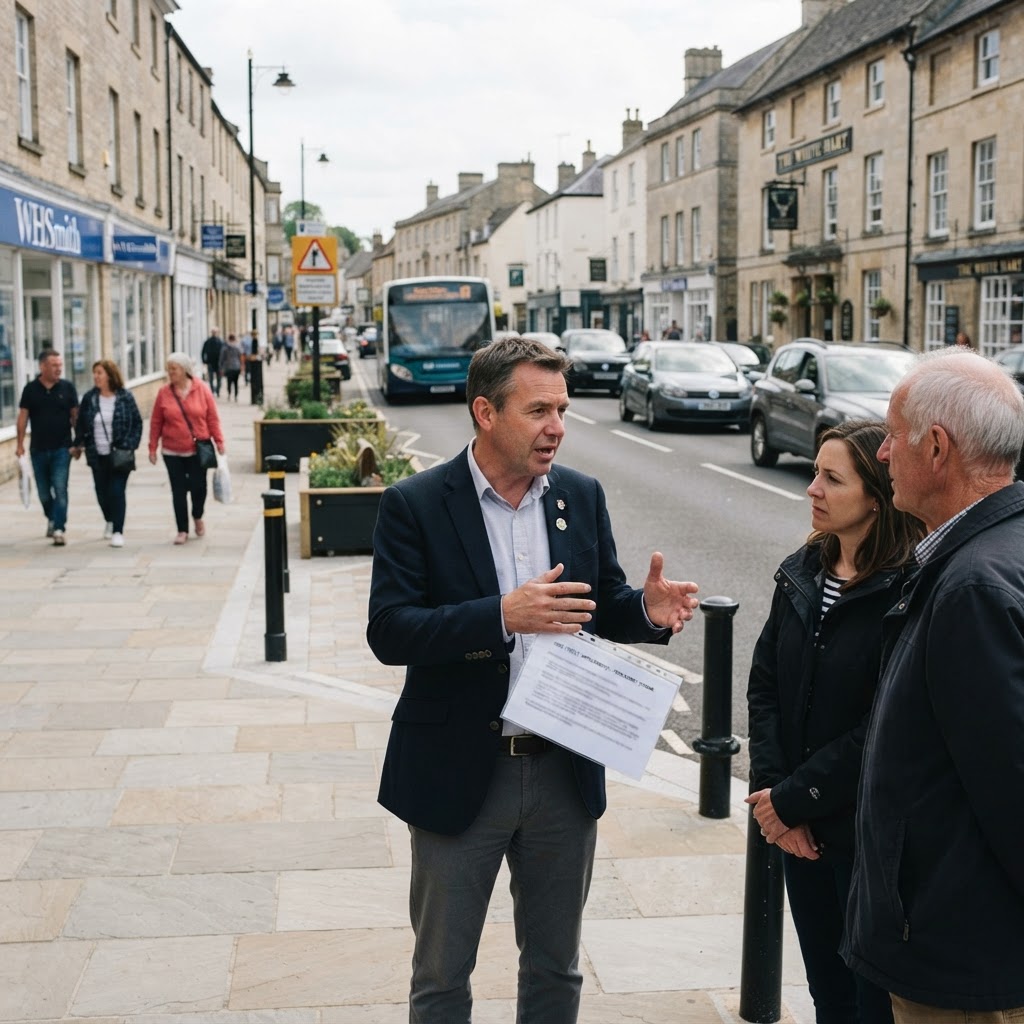
Wiltshire Council has confirmed that the trial period allowing vehicle access to Calne's central shopping thoroughfare has concluded. Based on findings from the testing phase, the local authority has decided to maintain this arrangement indefinitely.
The long-standing debate over the future of Calne town centre has finally reached a definitive conclusion, as Wiltshire Council has confirmed that the current traffic arrangements on the High Street are to become permanent. For months, residents and business owners have watched as the historic market town navigated a trial period that saw the central thoroughfare reopened to vehicle access, a move that stirred significant discussion about the best way to balance modern convenience with the preservation of a heritage shopping environment. Having evaluated the data gathered during the testing phase, the local authority has opted to abandon the previous pedestrianisation efforts in favour of a long-term strategy that integrates motorised transport back into the heart of the town.
This decision represents a notable shift in policy for Wiltshire Council, which had previously championed road closures as a primary method to improve air quality and enhance pedestrian safety. Supporters of the original closure argued that a car-free High Street offered a more pleasant experience for shoppers and families, suggesting that it encouraged a slower pace of life conducive to supporting independent retailers. However, the council has now prioritised accessibility, concluding that the return of vehicles will assist in maintaining the commercial viability of the town centre by ensuring that motorists can reach shops more easily, even if it forces a rethink of how pedestrians share that space.
The implications for local infrastructure are significant and will be felt almost immediately by those who live and work in the area. As the town settles into this permanent arrangement, the council faces the task of managing traffic flow and parking patterns that have been in a state of flux since the trial began. Residents living in the vicinity have expressed a mix of reactions, with some welcoming the return of road access for its sheer convenience, while others worry that the increased volume of cars will heighten congestion levels and undermine the character of the town centre. Balancing these competing interests will be the next major challenge for local planners who must ensure that the High Street remains functional for both drivers and those on foot.
For the small businesses that line the historic street, the move introduces an element of uncertainty. Many shopkeepers have been carefully monitoring their footfall figures throughout the trial period, attempting to analyse whether vehicle access serves as a catalyst for growth or a deterrent to the casual shopper. While some owners believe that increased visibility and ease of access will drive up revenue, others fear that the return of steady traffic might discourage the leisurely strolling that often leads to impulse purchases. Only time will tell whether this permanent change will act as a boost to the local economy or if the town will need to practise new ways of marketing itself to stay competitive in a changing retail landscape.
Ultimately, the choice to keep the High Street open serves as a stark reminder of the complexities inherent in managing heritage sites. As Calne adapts to this new chapter, the local authority will likely face continued calls to monitor air quality and safety measures to ensure that the environment remains welcoming. Whether this move proves to be a success will depend largely on how effectively the town can manage the interplay between traffic and the pedestrian experience. For now, the people of Calne must prepare for a future where the rumble of engines is once again a standard feature of their daily commute through the town centre, leaving the debates of the past firmly in the rear-view mirror.
Source: Gazette & Herald — Calne · View original