Politics & Council · Wiltshire-wide
Wiltshire Council Stabilizes Budget Forecast Amid National Local Authority Funding Crisis
By Swindon Now Editorial Team · Publication date not recorded
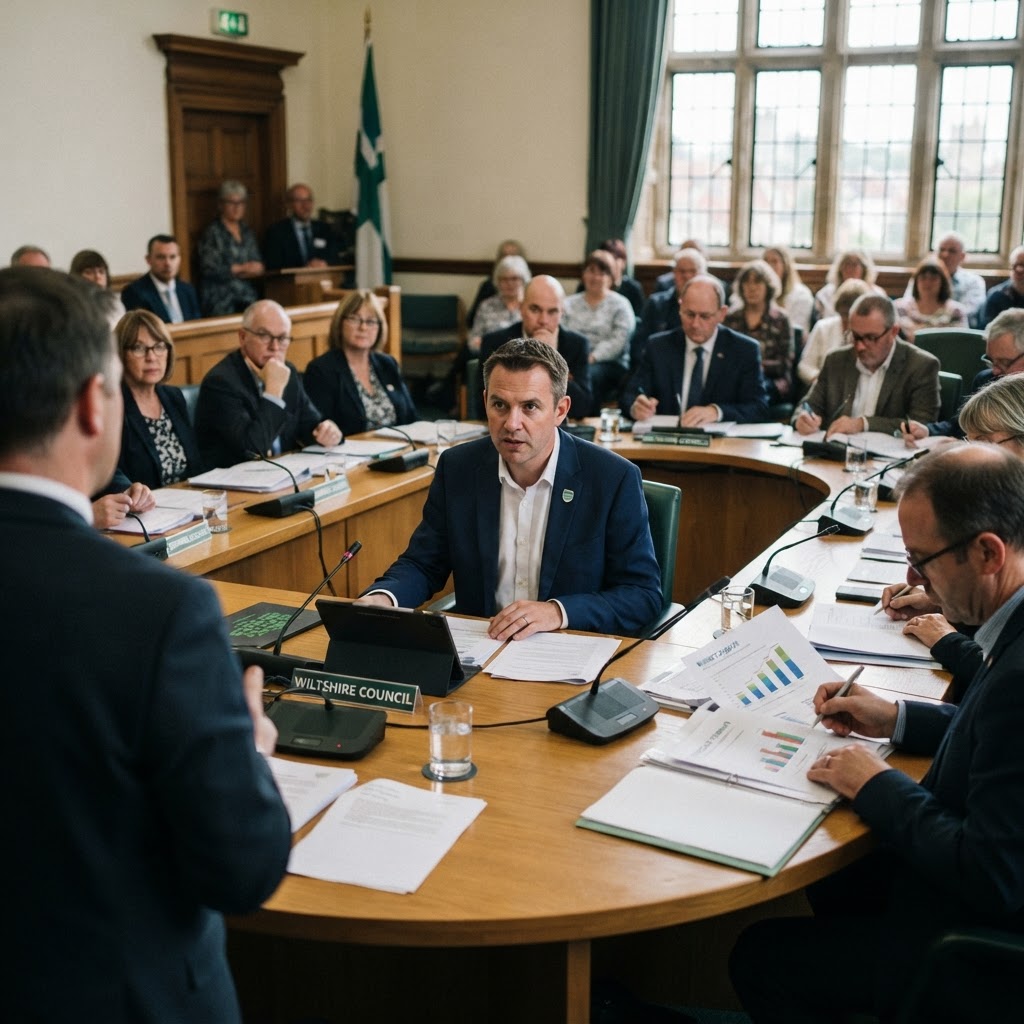
Wiltshire Council has confirmed it anticipates avoiding the widespread financial instability currently impacting local authorities across the United Kingdom. Through a combination of strategic tax adjustments and internal efficiency measures, officials project a balanced budget through the 2027/28 fiscal year.
As a wave of financial uncertainty sweeps across local authorities throughout the United Kingdom, leaving many town halls facing the grim prospect of bankruptcy and emergency intervention, Wiltshire Council has offered a rare glimmer of stability. In a climate where the national local government sector is grappling with severe budgetary shortfalls, officials at County Hall have confirmed that they anticipate avoiding the systemic collapse seen elsewhere. Through a rigorous programme of internal efficiency measures and strategic financial planning, the council has projected a balanced budget through to the 2027/28 fiscal year, bucking a trend that has left neighbouring areas teetering on the edge of insolvency.
This robust outlook serves as a vital reassurance to residents who have watched with concern as headlines detail the struggles of other councils. While many counterparts across the country are forced to strip back services to the bare bones, Wiltshire has managed to avoid such drastic measures by choosing to prioritise long-term sustainability over short-term fixes. By opting to analyse their expenditure with clinical precision, leaders believe they have successfully ring-fenced the essential services upon which the community relies, from social care to waste collection. It is a balancing act that requires constant vigilance, but one that currently places the county in a relatively enviable position compared to the wider sector.
However, this stability is not without its costs, and the local authority has been transparent about the fact that residents will feel the impact of these decisions. The path to financial equilibrium has relied heavily on carefully managed tax adjustments, meaning that households will continue to shoulder a portion of the burden required to keep the council's coffers full. While the necessity of these increases is often met with understandable frustration, the administration argues that it remains a far more palatable alternative to the catastrophic service cuts that have decimated the provision of public amenities in other regions of the country.
Moving forward, the council has committed to a strategy that aims to maintain this equilibrium without necessitating further emergency measures. This involves a sustained focus on internal modernisation, which officials believe will help to optimise council functions and eliminate unnecessary waste. While the economic winds remain challenging, the leadership is confident that their proactive approach will provide the resilience needed to weather the ongoing storm of rising costs. For the people of Swindon and the surrounding Wiltshire towns, this provides a modicum of predictability in an increasingly volatile financial landscape.
Ultimately, the ability of the council to keep its head above water offers a testament to the benefits of prudent fiscal management. Although the burden of tax increases will certainly be felt on the doorstep, the trade-off remains clear: the continued delivery of core services without the looming spectre of insolvency. As the council continues to practise rigorous oversight, residents can take some comfort in the knowledge that Wiltshire remains on a stable trajectory whilst others struggle to find their footing in the face of national pressures.
Source: Salisbury Journal · View original